Special Offers

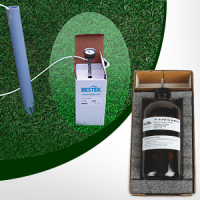
3 Great gas-filter and baseplate offers from SGT.

Full details are available here


Inlet Seals for Agilent GC's - Save up to 60%

Full details are available here

Our Commitment

When you need high quality chromatography supplies, the people at Thames Restek will take the time to understand you & your needs. You'll be offered honest, practical, specialist advice from experienced professionals with an exceptional level of service guaranteed!


Melamine Analysis

Melamine Analysis

detect melamine contamination in milk
Products

Complete Analytical Solution
Melamine Analysis Kit

Includes column, standards, derivatization reagent, & accessories
PLUS easy-to-follow instructions with procedural checklist to simplify laboratory documentation
» Click here to access these instructions as a PDF.

Frequently Asked Questions

Q: What is melamine?
A: Melamine is an organic compound that is rich in nitrogen. When combined with formaldehyde it produces melamine-resin. Melamine-resin is widely used in several textiles, plastics, adhesives, flame-resistant products, and some cleaning agents.

Q: Why is melamine added to food?
A: Melamine is illegally added to food to artificially elevate the protein content values of products. The Kjeldahl method, which is used to determine protein content, works by testing for nitrogen content. When protein is digested, nitrogen is released and converted to ammonia. The amount of ammonia is determined by titration and is correlated to the amount of protein present. This method yields falsely high numbers when nonprotein nitrogen is in the sample.
Read more ...

 
Beyond C18—Increase Retention of Hydrophilic Compounds Using Biphenyl Columns

Beyond C18—Increase Retention of Hydrophilic Compounds Using Biphenyl Columns

By Amanda Rigdon, Pharmaceutical Innovations Chemist and Rick Lake, Pharmaceutical Market Development Manager

Searching for a better way to retain hydrophilic aromatic drug compounds? Biphenyl phases, such as the Pinnacle™ DB Biphenyl column, provide greater retention than alkyl phases. Use a Biphenyl column to separate difficult-to-retain polar aromatics from unretained matrix contaminants.


Many drug classes include compounds with aromatic ring structures, some of which also contain a sulfone or sulfoxide group. Both sulfur groups have dipole moments, adding a hydrophilic character to compounds containing these functional groups. The analysis of hydrophilic compounds on a traditional alkyl column (e.g., C18) can be problematic, since alkyl columns depend on hydrophobic (dispersive) interactions for retention. Since the sulfone and sulfoxide groups contain π bonds, the Biphenyl column’s affinity toward compounds containing these bonds makes it a logical choice when increased retention of compounds containing these groups is desired.

Read more ...

 
Reduce Downtime with Robust Lipidomics Method

Reduce Downtime with Robust Lipidomics Method

By Julie Kowalski, Ph.D., Innovations Chemist, and John Hanley Jr., Ph.D.*, Platform Development Manager
*Lipomics Technologies

Why lose days to downtime? Restek columns, such as the 10,000 injection Rxi®-5ms column shown here, are rugged and built for consistent long-term performance.

Lipidomic studies of cholesterol synthesis, absorption, and excretion, provide information central to the investigation of cardiovascular disease and other disorders. High-throughput methods are critical to lipidomics and are used to screen thousands of samples in order to identify biomarkers and clinical diagnostics with significant predictive power. Labs can save days of downtime by using an Rxi®-5ms column in assays similar to our test method for cholesterol and low-level sterol metabolites.

Reduced downtime for column changes and revalidation lead to significantly increased lab productivity.


Read more ...

 
Reliably Detect Pesticides Down to 10pg with Sensitive SIM GC/MS Multiresidue Method


Reliably Detect Pesticides Down to 10pg with Sensitive SIM GC/MS Multiresidue Method

By Jason Thomas, Environmental Innovations Chemist

Market demands are increasing for multiresidue pesticide methods that are both sensitive and effective across a broad range of compound chemistries. The Rxi®-5Sil MS column gives you accurate low level results for a wide variety of analytes in a single run.

As labs operate in an extremely competitive market, the demand for more sensitive multiresidue pesticide methods is increasing. A GC/MS method is a logical choice, as this instrument provides a high degree of specificity, yet is relatively inexpensive and easy to operate, compared to LC/MS/MS, high resolution MS, or GC/MS/MS. However, to take full advantage of GC/MS, careful column selection is critical. The column used must be of the proper selectivity to separate compounds that share common spectra, and also exhibit a high degree of inertness and minimal bleed. Here we demonstrate the effectiveness of an Rxi®-5Sil MS column for low level analysis of a wide variety of pesticides differing in volatility, compound class, and degree of activity.

The inertness of the Rxi®-5Sil MS column ensures linear performance down to 10pg on-column, allowing more accurate low level quantification.

Read more ...

 
« StartPrev123NextEnd »

Page 1 of 3

Product Suppliers

The Latest Column

Latest Column

Details on our latest offers.

Restek Advantage

Seminars near you

Global Restek Advantage